Your brain makes 95% of its decisions subconsciously, including how it feels about a room.
Ever wondered why the iPhone’s edges are rounded instead of sharp? Or why modern furniture, cars, and even building facades are moving away from rigid geometry?
There’s science behind it. A 2013 study published in Psychological Science found that people consistently rate spaces and objects with curved edges as more pleasant than those with sharp angles. The reason for this is sharp lines subconsciously trigger the brain’s threat detection system, an innate response evolved to avoid danger.
Apple’s designers apparently understand this phenomenon, and you can tell by looking at their designs. The iPhone’s rounded design looks appealing and it feels safe in the hand and to the eye. The same principle explains why hospitals, museums, and even high-end interiors often favor organic forms, they signal comfort and safety to the limbic brain.
Design, at its best, doesn’t just appeal to sight. It communicates safety, warmth, and belonging, all through form.
Before you’ve noticed the color of the wall or the curve of the furniture, your nervous system has already decided whether to relax, focus, or flee.
The Hidden Language of Space
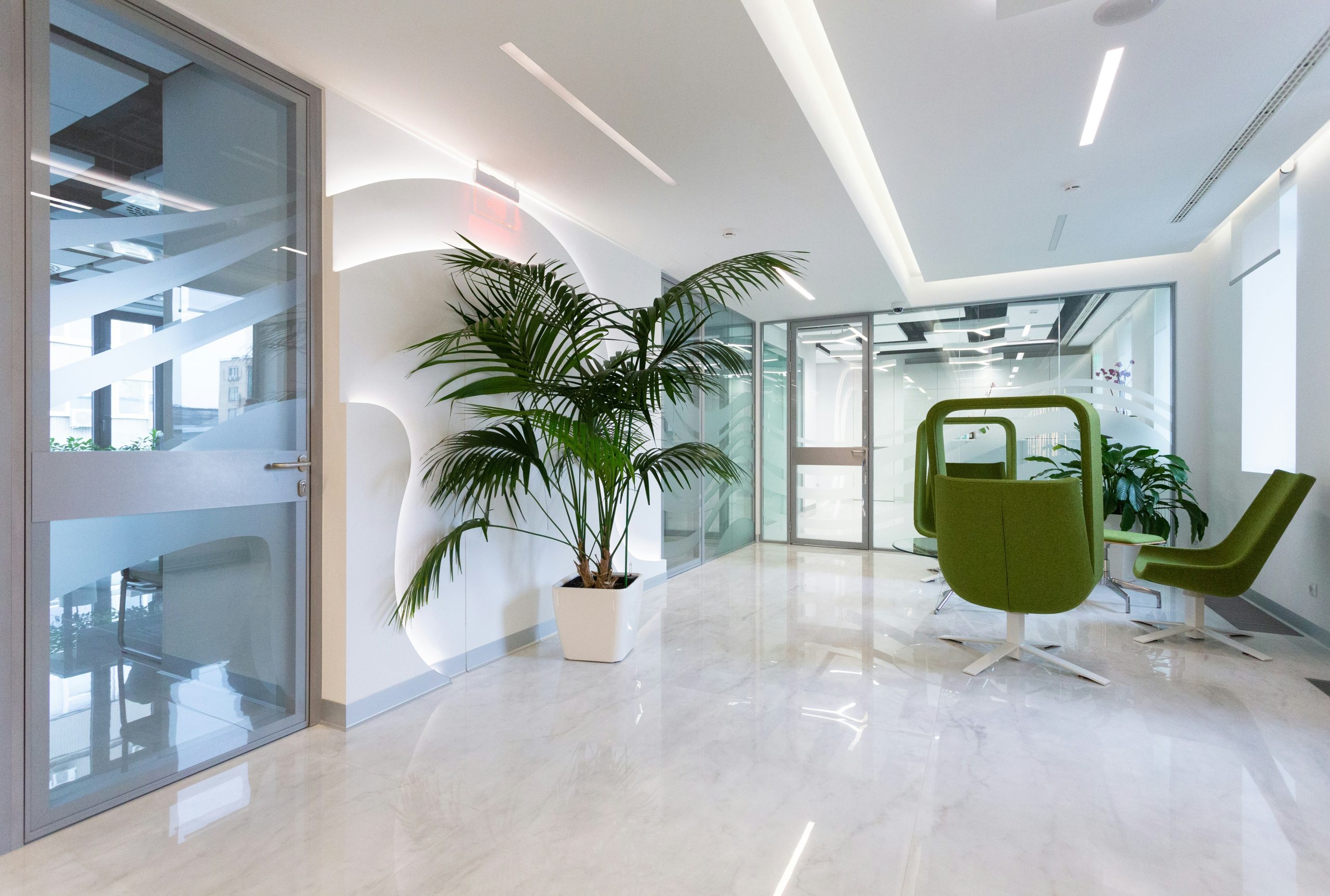
Neuroscientists have long shown that our surroundings affect our emotions and cognition. A University of Exeter study found that employees working in spaces enriched with plants were 15% more productive than those in sterile offices. It wasn’t about taste, it was about how their brains reacted to life and color in their environment.
That’s the same science behind how Apple Stores use glass, open sightlines, and wood surfaces. These materials reduce what’s called cognitive load, the mental effort required to process your surroundings. This results in calm curiosity, which is why you stay longer and explore more, a win for the business.
Light, Color, and Chemistry
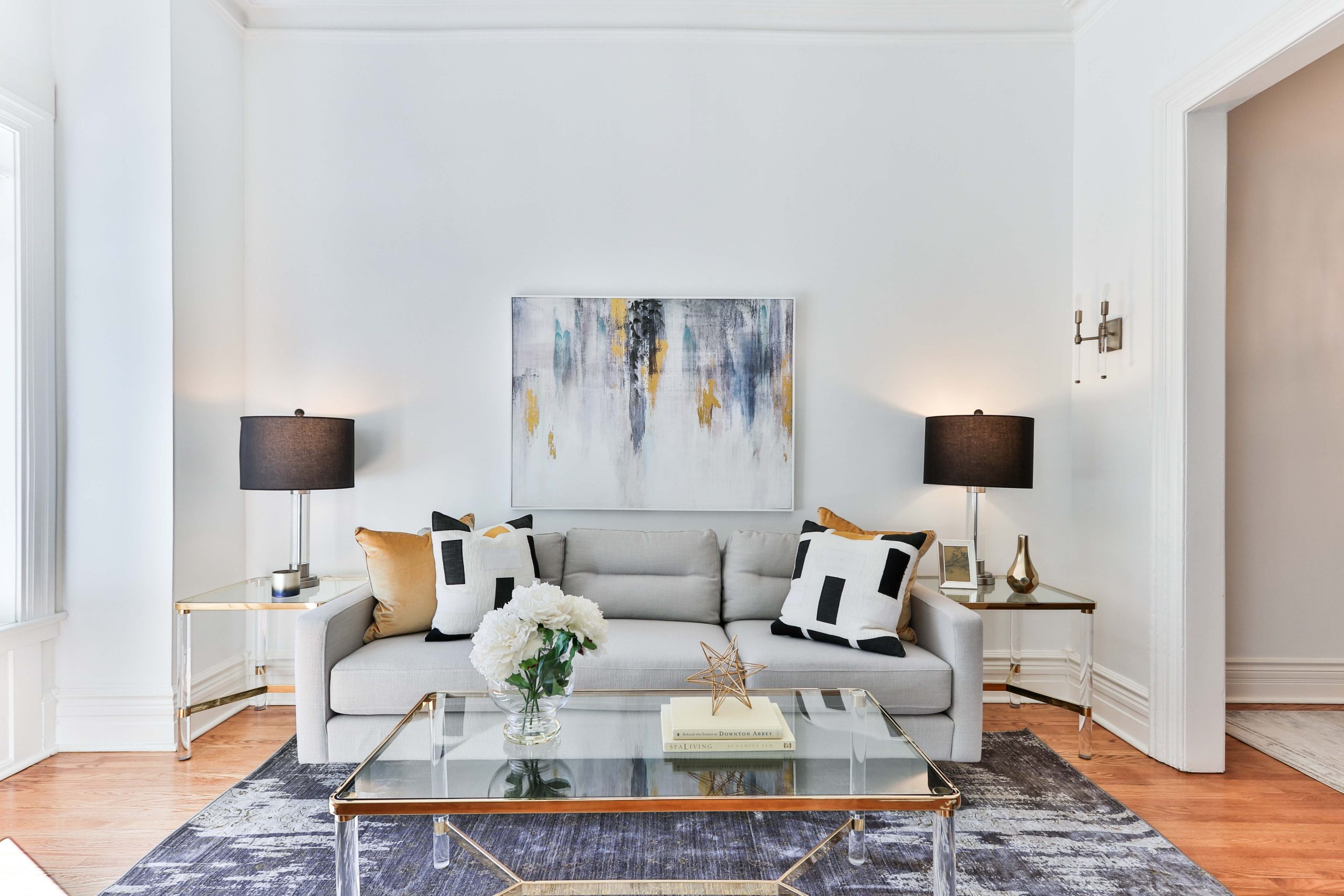
The human brain gets millions of data from one view of a color resulting in the brain deciding what to feel about said color. Warm tones like terracotta, ochre, amber energize and invite while cool hues like sage, blue, soft grey lower blood pressure and foster calm.
Light amplifies this chemistry. A Harvard Medical School study showed that blue-enriched light improves alertness during the day, while warm light at night supports natural sleep cycles. That’s why the best interior environments balance natural light with adaptive lighting, helping the body stay in rhythm instead of fighting it.
Light, color and brain chemistry all work hand in hand to form the overarching vibe and feeling of any space.
Flow Shapes Behavior
I’ll prove to you that you’ve felt this before. IKEA stores make you follow a winding path almost unconsciously. That’s deliberate, a “forced-path layout” that lets customers experience nearly every product.
Shopping malls use a similar principle, are designed to guide visitors almost instinctively. Curved corridors, strategically placed anchor stores, and open sightlines all shape how we move through the space, subtly increasing the chance we’ll notice more shops and spend more time inside.
In homes, thoughtful circulation works the same way. A well-designed flow reduces stress by giving the brain a sense of orientation and ease, you don’t think about where to move, you just move.
Texture and Memory
Texture is a quiet language. We associate raw wood with warmth, marble with grandeur, linen with comfort. Luxury hotels leverage this perfectly, they use tactile materials that evoke memory and safety.
When a room feels “right”, it’s often because its surfaces are speaking to your past experiences, not your conscious preferences. You don’t even know why you feel cozy and safe, but you do.

The True Work of Design
Interior design in its purest form can be likened to behavioral engineering. A skilled designer isn’t arranging objects aesthetically, they’re shaping experiences and performing neurological manipulations.
When a home feels peaceful, or an office fosters focus and collaboration, it’s because light, form, texture, and movement are all working in harmony with the human nervous system. Good design, ultimately, is neuroscience made beautiful.
A Thought to Leave You With
If your environment can raise or lower your stress, sharpen your focus, and influence your emotions, then design isn’t just about what surrounds you, but about the version of you it quietly creates.
As this series continues, we’ll take a closer look at the principles and science behind interior design, revealing how carefully considered spaces influence our emotions, behavior, and well-being, and inviting you to reflect on how your own spaces shape the life you live.